Futuristic Pixel Landscape: A Design Game-Changer
Imagine a visual style that instantly transports viewers to the neon-lit grid of a cyberpunk city while simultaneously evoking the warm, nostalgic glow of a vintage arcade cabinet. This is the unique power of the Futuristic Pixel Landscape aesthetic, and it’s rapidly becoming a go-to resource for graphic designers looking to create unforgettable brand identities and digital experiences. This trend offers more than just pretty pictures; it provides a strategic visual language that bridges generational gaps and signals both innovation and cultural awareness.
Why Pixel Landscapes Matter in Modern Visual Design
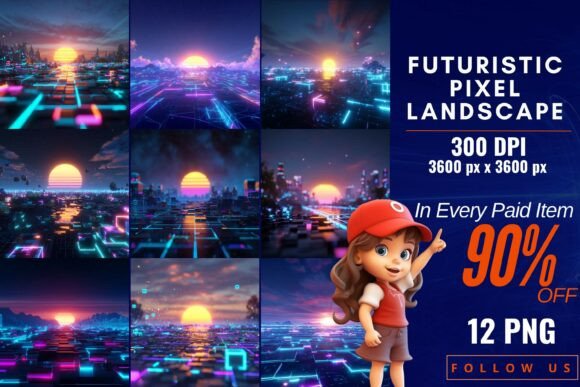
In a saturated digital marketplace, visual distinctiveness is non-negotiable. The Futuristic Pixel Landscape style offers a deliberate departure from hyper-realistic 3D renders and flat vector illustrations. It introduces an element of intentional craft. When you integrate assets like the 12 high-resolution backgrounds from this collection, you aren’t just adding a backdrop; you are layering your project with subtext—innovation, playfulness, and a deep respect for design history.
For branding and logo design, adopting a pixelated terrain can signal that a company is forward-thinking yet understands its roots. It creates an immediate visual hierarchy that directs the eye across glowing grids and neon skies. This balance between retro arcade vibes and futuristic aesthetics works exceptionally well for tech startups, game developers, and creative studios aiming for a distinct market position.
Transforming Brand Identity and Digital Assets
The specific technical specifications of this asset pack—3600 x 3600 px at 300 DPI—make it incredibly versatile for a wide range of creative projects. Here are some high-impact applications where this style truly shines:
- Social Media Graphics & Digital Marketing: Break the scroll pattern with neon-lit backgrounds that tell a story. Use them as Instagram story backdrops, YouTube thumbnails, or Twitter header images to create a cohesive, retro-futuristic brand feed that boosts user engagement.
- Web and UI Design: Create immersive landing pages where the pixel landscape serves as a hero background. Pair it with clean typography to ensure readability and maintain visual balance in your user experience (UX) workflow. The terrain provides an excellent foundation for layered interface elements.
- Print Design & Packaging: The high resolution ensures crisp, professional prints. Ideal for album covers, posters, and limited-edition packaging. The cyber city skylines add a premium, collectible feel to any physical product.
- Merchandise & Apparel: Perfect for retro-cyberpunk clothing lines. The bold colors and distinct pixel geometry translate beautifully onto t-shirts, hoodies, and accessories, creating wearable art that resonates with niche audiences.
- Game Assets & UI: Level backgrounds, loading screens, and menu interfaces benefit immediately from the pre-rendered depth and atmospheric lighting found in these pixelated cityscapes.
How to Select and Use Pixel Landscapes Effectively
Choosing the correct visual asset is a critical step in any professional design workflow. When evaluating the options within a Futuristic Pixel Landscape collection, consider these factors to ensure a polished and professional result:
- Color Palette & Compatibility: Does the neon sky complement your existing brand colors? The glowing grids and sunset gradients can be used to extract a primary color palette for a cohesive campaign across web and print.
- Visual Hierarchy & Readability: A busy background can overpower foreground text. Look for elements with natural negative space or darker gradients where text can rest comfortably. The contrast between dark silhouettes and bright neon in these scenes provides excellent areas for placing key messaging.
- Consistency Across Collateral: When used across multiple platforms, sticking to one or two complementary scenes helps solidify brand recognition. This consistency is a hallmark of strong brand identity and professional execution.
- Scalability & Resolution: Always verify your asset's specs. At 300 DPI and 12x12 inches, these files are print-ready, giving you the flexibility to use them for large-format advertising or detailed UI components without quality loss.
Pairing Typography with Neon Grids
The success of any design heavily relies on how your typography interacts with its background. A Futuristic Pixel Landscape demands thoughtful font pairings. For a modern, clean look, use geometric sans-serifs like Montserrat or Futura to contrast with the pixelated texture. For a more authentic retro feel, dive into bitmap or custom pixel fonts. The key is to maintain readability; use bold weights and generous tracking to cut through the visual noise of the glowing city grids. This attention to detail elevates your work from a simple layout to a comprehensive visual communication strategy.
Ultimately, the integration of trends like the Futuristic Pixel Landscape reflects a broader movement in graphic design toward narrative-rich, emotionally resonant visuals. It allows designers, marketers, and business owners to bridge the gap between the digital frontier and a cherished past. By carefully selecting and implementing these creative assets, you ensure your projects are not only seen but remembered—balancing aesthetic impact with clear, strategic communication goals.