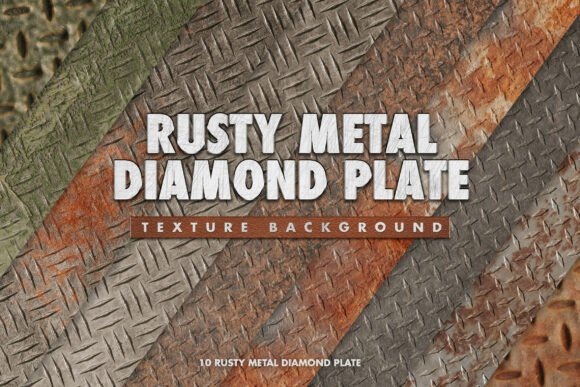
Rusty Metal Diamond Plate Texture: The Industrial Aesthetic That Demands Attention
In an era where digital design often leans toward the sleek, the minimal, and the perfectly polished, a counter-movement has taken root—one that embraces grit, wear, and the unmistakable patina of real-world materials. At the center of this shift is the Rusty Metal Diamond Plate Texture, a visual asset that carries authenticity, history, and industrial character in every pixel. For professionals working across graphic design, 3D rendering, game development, and brand storytelling, this texture has become far more than a background—it is a tool for grounding digital work in tactile reality.
What makes the Rusty Metal Diamond Plate Texture so compelling is not just its visual complexity but the story it tells. A diamond plate pattern—often called tread plate or checker plate—is itself a symbol of utility, strength, and industrial function. When you layer rust, corrosion, and worn surfaces onto that geometric foundation, you create something that feels lived-in, used, and honest. In a creative landscape where audiences are increasingly skeptical of overly polished imagery, these textures offer a way to signal authenticity and depth.
Understanding the Rusty Metal Diamond Plate Texture
A Rusty Metal Diamond Plate Texture is a high-resolution digital image that captures the surface of aged, corroded diamond-plate metal. The diamond plate pattern consists of raised, repeating lozenge shapes that provide slip resistance and structural reinforcement in industrial settings. When this surface is subjected to weather, moisture, and time, rust develops in uneven patches, creating a rich tapestry of orange, brown, red, and black tonalities. The raised diamonds wear differently than the recessed areas, producing a surface that is both textured in pattern and varied in color.
These textures are typically captured from real metal surfaces or meticulously crafted in digital environments to replicate authentic corrosion. The resulting files—often in JPG format at resolutions like 4500×3000 pixels—preserve the sharp embossed details of the diamond plate while showcasing the organic variability of rust. This combination of geometric order and chaotic degradation is precisely what makes the texture so valuable for creative work.
To understand why this matters, consider how visual authenticity functions in contemporary media. A perfectly clean, unblemished diamond plate texture might look like a CAD rendering or a sterile product shot. But a rusty diamond plate texture immediately communicates environment, history, and use. It suggests a factory floor that has seen decades of foot traffic, a shipping container weathered by ocean salt, or a piece of heavy machinery retired after years of service. That narrative layer is what transforms a texture from a mere visual element into a storytelling device.
The Broader Market Shift Toward Industrial Realism
The growing interest in the Rusty Metal Diamond Plate Texture cannot be separated from larger trends in design, branding, and content creation. Across multiple industries, there is a detectable move away from perfection and toward the raw, the unfinished, and the real. This is visible in everything from brand identity design—where distressed typography and grunge textures have found renewed relevance—to architectural visualization, where adding wear to surfaces is now standard practice for achieving photorealism.
In the gaming and virtual production sectors, the demand for high-quality rusty metal textures has surged. Game environments that aim for immersive realism require surfaces that reflect real-world aging, especially in post-apocalyptic, military, or industrial settings. Rusty metal diamond plate is a staple in these contexts because it simultaneously signals strength and decay. It tells the player or viewer that this is a space where things have happened, where time has passed, and where the environment has its own history.
Trends in UI and motion design have also embraced industrial textures as overlays and background elements. Adding a subtle rusty diamond plate layer to a graphic or video introduces warmth, texture, and a handcrafted feel that flat color simply cannot replicate. This aligns with a broader cultural preference for materiality in digital experiences—users want to feel like they are interacting with something tangible, even through a screen.
Entrepreneurs and marketers have taken note of this shift as well. Product photography, social media graphics, and advertising materials that incorporate rugged textures often outperform their polished counterparts in engagement. There is a psychological dimension at play: rough, worn surfaces convey durability, honesty, and a no-nonsense attitude. For brands in the automotive, outdoor, construction, or craft beverage industries, rusty metal diamond plate textures offer an immediate visual shorthand for these values.
Why Creators and Professionals Are Paying Attention
The appeal of a Rusty Metal Diamond Plate Texture goes beyond aesthetics. For busy professionals—whether they are freelance designers, in-house creative teams, or independent studio owners—the efficiency of a ready-to-use, high-resolution texture pack is a significant advantage. Creating authentic rust and wear from scratch, whether through photography or digital painting, is time-consuming and technically demanding. A curated collection of ten textures covering various stages of corrosion and surface wear provides a versatile library that can be deployed across many projects.
Moreover, the resolution and quality of these textures matter deeply in professional workflows. A 4500×3000 pixel file at 300 DPI supports large-format printing, detailed 3D texture maps, and high-resolution screen displays. The RGB color mode ensures compatibility with digital design tools, while the sharp embossed details allow the texture to hold up under close scrutiny. When a texture is used as a displacement map, a normal map, or a surface overlay, the quality of the original source material directly affects the final result. professionals understand that investing in high-grade texture assets prevents the kind of pixelation or artificial look that can undermine an otherwise solid composition.
Another reason for the growing attention is the versatility of the rusty diamond plate motif itself. It works equally well as a dominant background element in a poster design and as a subtle overlay in a brand video. It can be scaled, rotated, colorized, and blended in countless ways. Designers appreciate assets that reward experimentation, and the geometric regularity of the diamond plate provides a strong visual anchor even when heavily modified. Combined with the unpredictability of rust patterns, each texture in a collection becomes a unique starting point for creative exploration.
Changing Workflows and Evolving Expectations
Creative workflows have evolved significantly in recent years, and the role of texture assets has expanded accordingly. Where textures were once primarily used in print layout or as background fill, they are now central to 3D rendering, real-time visualization, and motion graphics. The Rusty Metal Diamond Plate Texture fits naturally into these modern pipelines. In 3D applications like Blender, Maya, or Cinema 4D, a quality JPG texture can be applied as a diffuse map, combined with a bump or gloss map derived from the same source, to produce a convincingly dimensional surface.
Expectations around texture quality have also risen. Audiences familiar with high-fidelity games and cinematic visual effects are quick to notice when a surface looks fake or procedurally generated without care. This puts pressure on creators to source textures that exhibit natural variation, realistic color shifts, and correct wear patterns. A rusty diamond plate texture that captures the subtle way rust pools in the recessed grooves of the pattern, or how the raised diamonds retain some of their original metallic sheen, will always outperform a generic noise-based simulation.
For freelancers and small studios, the ability to access professional-grade textures without shooting them in-house is a game changer. It reduces project timelines and allows solo creators to compete with larger teams in terms of output quality. For marketers, these textures enable rapid prototyping of visual concepts—testing a rugged industrial look for a product launch or campaign without committing to a full photoshoot. The expectation now is that high-quality visual assets should be accessible, affordable, and immediately usable. Texture packs that deliver on these expectations are not just nice to have; they are essential tools for staying competitive.
Practical Applications Across Creative Disciplines
The practical uses of a Rusty Metal Diamond Plate Texture span a wide range of creative and commercial contexts. In graphic design, it can be used as a full-screen background for posters, flyers, or social media content that needs an industrial edge. Combined with bold typography and a limited color palette, the texture becomes a defining element of the visual identity. It also works effectively as a texture layer in photo compositing, where it can be blended with other images to add surface interest and coherence.
In 3D rendering, the texture serves as a surface map for models that require an authentic metal look. Industrial machinery, vehicle components, architectural details, and environment props all benefit from the combination of embossed pattern and realistic corrosion. Game asset creators use these textures to build immersive world elements quickly, knowing that the material will read correctly in engine lighting. The sharp embossed details ensure that even at close camera distances, the surface remains convincing.
Poster art and print design are perhaps the most direct beneficiaries of high-quality industrial textures. A poster for a film, music event, or product launch that uses a rusty diamond plate background immediately communicates a specific mood—gritty, grounded, and real. It avoids the sterility of digital gradients and embraces a tactile aesthetic that stands out in a crowded visual environment. Photo effects artists also use these textures as overlays to add grit and atmosphere to otherwise clean photographs, creating hybrid images that feel both realistic and stylized.
Video and motion designers are not excluded from this trend. Applying a rusty diamond plate texture as a background in a lower-third graphic, as an animated surface, or as a transition element can unify a production's visual language. The texture responds well to effects like displacement, blur, and color grading, meaning it can be adapted to fit various moods and styles without losing its essential character.
Linking to Larger Creative and Cultural Developments
What makes the Rusty Metal Diamond Plate Texture particularly relevant today is its connection to a broader cultural appreciation for imperfection and history. In an age of digital perfectionism and AI-generated imagery that can often feel sterile, there is a growing hunger for assets that carry the marks of real-world processes. Rust is not a flaw to be corrected; it is a feature to be celebrated. It tells a story of exposure, endurance, and transformation. This mindset aligns with movements in architecture, fashion, and product design that embrace patina, weathering, and the beauty of aging materials.
There is also an environmental and sustainability angle worth noting. As the creative industry moves toward more conscious production methods, the reuse of digital assets—like texture packs—reduces the need for new photoshoots, travel, and material waste. A single high-quality texture can be employed across dozens of projects, saving resources and time. Additionally, the aesthetic of rust and wear resonates with upcycling and repurposing narratives that are increasingly popular in consumer culture. Using a rusty diamond plate texture in a design can subtly communicate values of durability, resilience, and respect for the lifecycle of materials.
For entrepreneurs and marketers, this texture taps into the authenticity trend that has reshaped branding over the past decade. Consumers are more likely to trust brands that appear genuine, transparent, and grounded. A visual identity that incorporates rustic or industrial elements can signal that a company is not trying to hide behind polish and perfection. It is a strategic choice as much as an aesthetic one.
Conclusion: Embracing the Grit in Your Creative Toolkit
The Rusty Metal Diamond Plate Texture is a reminder that some of the most powerful visual tools are those that embrace imperfection. As creative professionals continue to seek ways to make their work feel more real, more tactile, and more connected to the physical world, textures like these will only grow in importance. They offer a bridge between the precision of digital creation and the authenticity of organic decay. Whether you are a designer building a brand identity, a 3D artist populating a virtual environment, or a marketer trying to cut through the noise, a well-crafted rusty diamond plate texture can add the weight, depth, and narrative that your project needs.
The collection of ten high-resolution backgrounds available today represents not just a set of files, but a resource for creative storytelling. With sharp embossed details, realistic rust variations, and professional-grade resolution, these textures are ready to be dropped into any workflow. The shift toward industrial realism, the demand for authentic surfaces, and the ongoing evolution of creative tools all point in the same direction: the raw, the worn, and the real are here to stay. Embrace the rust, and let your next project tell a story that only texture can deliver.