Why Game UI Star: Cartoonic Glossy Stars Shine in Modern Game Design
Few visual elements in game interfaces carry as much immediate emotional weight as a well-crafted star. The moment a player earns a rating, unlocks a reward, or sees a shimmering icon appear on screen, that simple shape communicates success, value, and progression. In recent years, the Game UI Star: Cartoonic Glossy Stars style has emerged as a dominant visual language across genres ranging from mobile puzzle games to platformers and casual RPGs. This approach blends the timeless appeal of cartoon aesthetics with a polished, reflective finish that feels both playful and premium. For designers, developers, and studio leads evaluating asset styles, understanding what makes these stars effective—and how to integrate them—is essential for creating interfaces that players genuinely enjoy interacting with.
The glossy cartoon star is more than a decorative flourish. It is a functional UI component that guides attention, signals achievement, and reinforces brand identity. When executed well, a set of Game UI star: cartoonic glossy shapes can transform a mundane score screen into a moment of celebration. This article explores the qualities that define this visual style, its practical role in game development workflows, and the factors teams should weigh before committing to a glossy cartoon star system.
What Defines a Cartoonic Glossy Star?
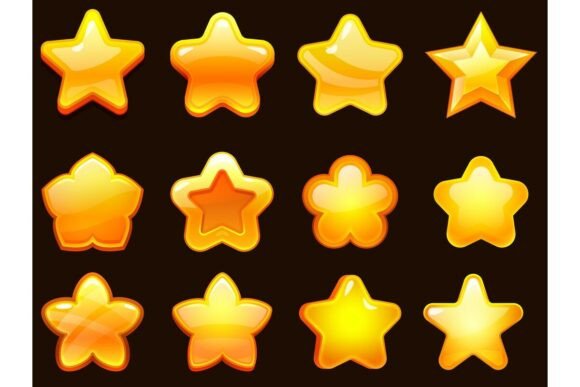
At its core, a cartoonic glossy star combines two distinct visual traditions. The first is the exaggerated, friendly linework and vibrant color palette typical of cartoon art. The second is a reflective, almost metallic sheen that gives the star depth and a sense of physical materiality. Unlike flat vector stars or highly realistic metallic badges, these stars occupy a middle ground where they feel handcrafted yet polished. The result is an icon that reads instantly as both playful and valuable.
Typical characteristics of a cartoonic glossy stars shape include:
- Bold outlines that define the star’s form clearly even at small sizes
- Gradient fills that transition from warm yellows and golds to brighter highlights
- Reflective hotspots that simulate a glossy or glass-like surface
- Slightly irregular proportions that avoid the rigid perfection of geometric stars, lending personality
- Soft drop shadows or glows that separate the star from the background without harsh edges
These elements work together to create a visual object that feels satisfying to earn. The gloss effect, in particular, signals quality. When a player sees a shiny star for games, the subtle highlight suggests something precious—a digital object worth pursuing. This psychological cue is why glossy stars appear so frequently in reward loops, from gacha game pull results to level-completion ratings.
The Role of Stars in Game Feedback Systems
Stars are one of the most universal rating and reward symbols in gaming. A shiny graphic yellow star communicates immediate positive feedback, often without the need for text. In many games, players earn one to three stars based on performance, and the visual difference between a dimmed star and a fully glossy, animated star can make the difference between a forgettable outcome and a genuinely satisfying moment.
Consider a typical three-star rating system in a puzzle game. When a player barely clears a level, they might receive a single flat star. When they achieve a perfect score, all three stars ignite with a glossy gleam and perhaps a short animation. That differentiation is not merely cosmetic—it reinforces gameplay goals and encourages replay. A high-quality shiny star for games makes the perfect score feel like a tangible reward, even when the only prize is the star itself.
Beyond rating systems, glossy cartoon stars appear in:
- Currency displays where stars represent premium in-game currency
- Progress meters that fill with stars as players complete milestones
- Menu navigation as decorative indicators for new content or achievements
- Character customization where stars denote rarity or special status
In each of these contexts, the cartoon gaming elements vector illustration set approach offers consistency. When every star across these different functions shares the same gloss and linework, the interface feels cohesive. Players learn to associate that specific visual style with positive outcomes, which strengthens the emotional feedback loop over time.
Practical Benefits for Developers and Designers
Adopting a Game UI star: cartoonic glossy stars set provides several practical advantages beyond visual appeal. For studios working with limited art resources, a well-designed vector set reduces the need for custom icon creation. A single glossy star asset can be scaled, recolored, and animated across dozens of use cases without losing its core identity. This efficiency matters especially for indie teams and mobile game developers who need to ship quickly without compromising quality.
Another consideration is readability. Cartoonic glossy stars, with their bold outlines and high contrast between the yellow body and white highlight, remain legible at very small sizes. On mobile screens, where UI elements compete for limited space, a star that blurs or becomes indistinct loses its communicative power. The gold gui glossy finish helps the star stand out against both bright and dark backgrounds, which is critical when players view interfaces in varied lighting conditions.
From a technical standpoint, vector-based glossy stars are straightforward to implement in most engines and design tools. Whether exported as SVG, PNG with transparency, or built directly in a shader, the structure of a glossy star is simple enough to animate without heavy performance costs. A subtle rotation or pulse effect on a shiny graphic yellow star can be achieved with a few lines of code or timeline keyframes, giving developers flexibility to add polish without over-engineering.
Choosing the Right Style for Your Game
Not every game benefits from a cartoonic glossy star approach. The style is inherently friendly and somewhat whimsical, which aligns well with casual, family-friendly, or vibrant titles. However, for games aiming for a grim, realistic, or minimalist aesthetic, a glossy cartoon star may feel out of place. In such cases, a flat icon, a metallic badge, or even a purely abstract symbol might better suit the tone.
Teams evaluating a Game UI star: cartoonic glossy stars set should consider three factors:
- Target audience expectations. Younger players and casual audiences respond strongly to bright, glossy rewards. Older or more hardcore players may find the style too childish unless it matches the game’s overall art direction.
- Integration with existing UI. The star style should complement button shapes, panel backgrounds, and typography. A set of cartoon gaming elements vector illustration assets that includes variations for different states (earned, locked, animated) makes integration smoother.
- Scalability across platforms. Stars that work well on a phone screen may appear too large or small on a desktop or tablet. Testing the asset at multiple resolutions before committing to a final design prevents rework later.
It is also worth considering whether to purchase a pre-made cartoonic glossy stars shapes asset pack or commission custom artwork. Pre-made sets are cost-effective and immediately available, but they carry the risk of appearing generic if used without modification. Custom sets allow more personality but require time and budget. Many successful studios compromise by starting with a high-quality base set and then customizing colors, shadows, or animation curves to match their specific branding.
Animation and Interactivity: Bringing Glossy Stars to Life
A static star is functional. An animated star is memorable. The gloss effect in particular lends itself well to simple motion. A rotate or bounce on collection, a shimmer that sweeps across the surface, or a scale-up when first displayed—each of these movements can make a shiny star for games feel responsive and rewarding. The key is restraint. Over-animating a star that appears frequently, such as in a score summary, can become distracting. Reserve the most elaborate animations for rare events like all-stars completion or unlocking a premium reward.
From a user experience standpoint, the star’s animation should also provide feedback about the action. A star that appears with a satisfying pop confirms that the player’s input was registered. A star that slowly fills with gloss as a meter increases communicates progress. The gold gui glossy style, with its distinct highlight regions, makes these partial states easy to visualize. Designers can mask the gloss layer to reveal it gradually, creating a filling effect that feels intuitive.
Many modern game engines offer built-in tools for 2D animation that work seamlessly with vector assets. Using Unity’s Animator or Godot’s AnimationPlayer, a glossy star can be scripted to respond to gameplay events in real time. This responsiveness is where the Game UI star: cartoonic glossy stars style truly shines—it bridges the gap between static art and interactive feedback, making the UI feel alive.
Common Pitfalls to Avoid
Even with a high-quality asset set, certain mistakes can undermine the effectiveness of glossy stars in a game UI. One common issue is inconsistent gloss direction. If different stars in the same interface have highlight reflections at different angles, they can look mismatched. Establishing a single light source direction for all UI elements, including stars, maintains visual harmony.
Another pitfall is overuse. When every element in the UI is glossy and bright, no single item stands out. Reserve the full glossy effect for stars that represent achievements, currency, or ratings. For decorative purposes, consider using a flat or semi-gloss variant from the same cartoon gaming elements vector illustration set. This creates a visual hierarchy where the shiniest elements naturally attract the most attention.
Color consistency also matters. A shiny graphic yellow star should stay within a defined hue range across all contexts. If the star appears warm gold in one screen and neon yellow in another, players may perceive it as a different type of object altogether. Referencing a style guide or color palette during implementation helps avoid this drift.
Finally, do not neglect accessibility. Glossy highlights can reduce contrast for some players, making the star harder to see against bright backgrounds. Ensure that the star’s outline is thick enough to remain visible, and consider offering an option to increase UI contrast in the settings menu. A star that looks great but is invisible to some players fails its core purpose.
Looking Ahead: Glossy Stars in Evolving Game Aesthetics
As game design continues to embrace vibrant, expressive art styles, the demand for playful yet polished UI elements is likely to grow. The Game UI star: cartoonic glossy stars aesthetic fits naturally into this trend. It carries the warmth of hand-drawn animation while meeting the technical demands of modern engines and screen resolutions. For teams building games that aim to delight rather than intimidate, these stars offer a proven way to reward players and guide their attention without relying on text or complex tutorials.
Whether you are prototyping a new mobile game, refreshing the interface of an existing title, or building a complete cartoon gaming elements vector illustration set for an upcoming project, the glossy cartoon star deserves careful consideration. It is a small element with outsized impact—one that can turn a routine interaction into a moment of genuine satisfaction. When chosen thoughtfully and implemented with consistency, it becomes a silent ally in keeping players engaged, motivated, and eager to chase the next star.